

Where is Nemunas?
Where is Nemunas?
Exhibition series in display of Lithuanian art of the
first half of the 20th century
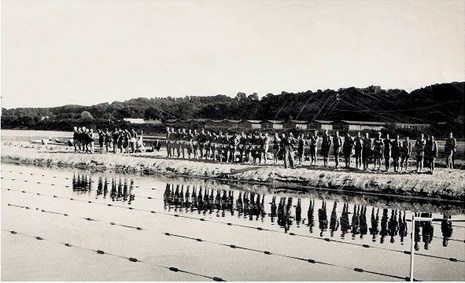
In the second half of the 20th century, the Nemunas began to slip away from us. A hydroelectric power plant interrupted its course and broke the river's continuity. Pollution depleted its ecological abundance and dulled the simple desire to swim in its waters on a hot summer's day. Today, we are trying to return to the Nemunas, asking ourselves: where has it gone? This exhibition looks for an answer in interwar Lithuania. Instead of offering a myth of paradise lost, it invites us to see the river's many meanings. The Nemunas is life: a beaver moving through the water, flowers blooming along the banks, a gull nesting on an island, holidaymakers'bodies drying on the sand. The Nemunas is current: carrying timber rafts, steamships and profit. The Nemunas is pulse: the unsettling force of spring ice drift, the unpredictable rhythm of rising and receding waters. The Nemunas is a landscape that binds together and pulls apart the histories of Lithuania, Poland, Germany and Belarus. The Nemunas is living matter: consoling, raging, saving, killing. To ask where the Nemunas has gone is also to ask where it can still be found: not on a map, but in our imagination, in the landscapes we inhabit, in everyday life and in our sense of identity.
This part of the permanent collection exhibition is designed as a temporary exhibition, inviting visitors to discover new stories, themes and artists.
Curators: Rugilė Rožėnė, Tomas Vaiseta
Architect Mindaugas Reklaitis
Designer Ugnė Balčiūnaitė
Exhibits were loaned by: M. K. Čiurlionis National Museum of Art, Lithuanian Central State Archives, Šiauliai Aušros Museum, Lithuanian Aviation Museum, Lithuanian Sports Museum, Birštonas Museum, Kaunas District Museum, Dr Jaunius Gumbis Lithuanian Art Collection, Vilna Gaon Museum of Jewish History, Kaunas Tadas Ivanauskas Museum of Zoology, Museum of the History of Lithuania Minor, Kupiškis Museum, Vytis Ramanauskas.
